
Why Is My AC Freezing Up? What to Do
(and What NOT to Do)
By Scott Feller, Owner & CEO of Koala Cooling & Plumbing | Updated June 28, 2026
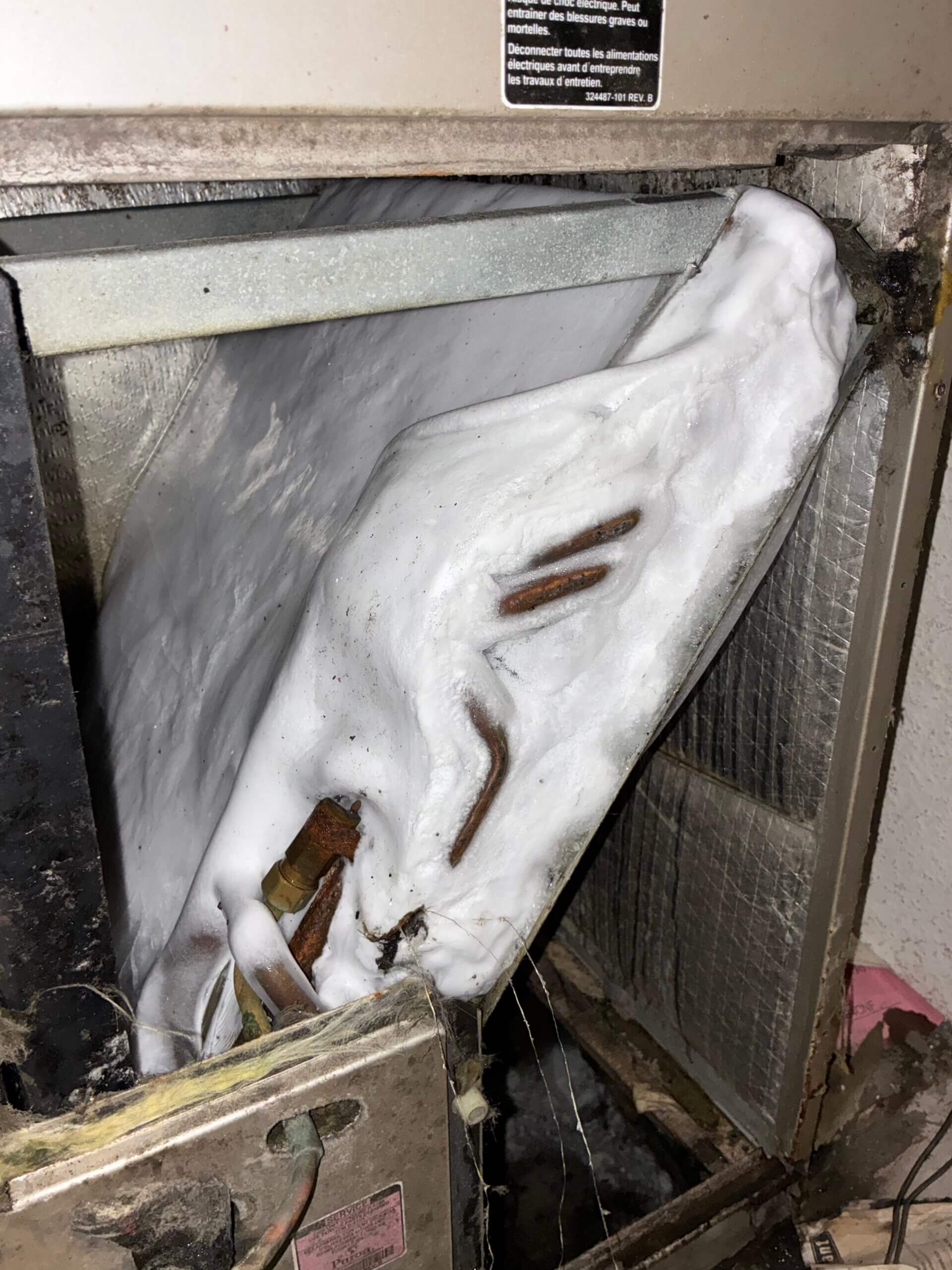
It’s 97 degrees outside in Round Rock, and your air conditioner has ice on it. That feels like it shouldn’t be possible, but here you are — staring at frost on your refrigerant line or a solid block of ice on your evaporator coil while your house gets warmer by the minute.
A frozen AC is one of the most common service calls we get during Central Texas summers, and the good news is it’s almost always fixable. The bad news is that running it while frozen can cause serious compressor damage. So let’s walk through what’s happening, what you can do right now, and when it’s time to call us.
Why Is My AC Freezing Up?
Your AC doesn’t make cold air the way most people think. It absorbs heat from the air inside your house using refrigerant that circulates through the evaporator coil. When that process gets disrupted — not enough airflow, not enough refrigerant, or a mechanical failure — the coil temperature drops below 32°F and the moisture in the air freezes right onto it. Ice builds, airflow drops further, and the whole thing snowballs.
The three most common causes in Central Texas homes:
Restricted Airflow
This is the #1 cause and the one you can actually do something about. A dirty air filter is the usual culprit — when the filter gets clogged, warm air can’t flow across the evaporator coil fast enough. The coil gets too cold, moisture freezes, and suddenly you’ve got ice. Blocked or closed vents, a failing blower motor, or collapsed ductwork can cause the same problem. In Round Rock, our dust and cedar pollen clog filters faster than most homeowners expect — especially from March through June.
Low Refrigerant
Refrigerant doesn’t get “used up” — if it’s low, there’s a leak somewhere. Low refrigerant drops the pressure inside the evaporator coil, which drops the temperature below freezing. You’ll usually notice reduced cooling performance before the ice starts forming. This one requires a licensed technician — refrigerant work isn’t a DIY job, and the leak needs to be found and fixed, not just topped off.
Dirty Evaporator Coil
Even with good filters, dust and grime build up on the coil over time. That layer acts like insulation — it blocks the heat transfer that keeps the coil at the right temperature. In Central Texas, where AC systems run 8+ months a year, coil buildup happens faster than in milder climates. Annual maintenance cleans the coil before it becomes a problem.
Will a Frozen AC Fix Itself?
No. A frozen AC will not fix itself, and running it while frozen can destroy your compressor — which is the single most expensive component in the system. The ice needs to melt completely before the system runs again, and whatever caused the freeze needs to be addressed or it’ll happen again within hours.
What to Do Right Now If Your AC Is Frozen
If you’ve got ice on your AC right now, here’s exactly what to do:
Step 1: Turn the thermostat to OFF. Not to a higher temperature — OFF. You need to stop the compressor from running while the coils are frozen.
Step 2: Turn the fan to ON. This runs the blower without the compressor, pushing warm air over the frozen coils to melt the ice. Leave it running.
Step 3: Check your air filter. If it’s dirty, replace it now. If you don’t have a replacement, pull the dirty one out entirely — running without a filter for a day is better than running with a clogged one while your system thaws.
Step 4: Wait 2–4 hours. The ice needs to fully melt. Don’t try to chip it off or pour hot water on it. Let the blower fan do the work. You may see water dripping — put a towel down around the indoor unit.
Step 5: Restart carefully. After the ice has fully melted and you’ve replaced the filter, switch back to COOL and set it to your normal temperature. If the system starts cooling normally, you likely had a simple airflow problem. If ice starts forming again within a few hours, you’ve got a refrigerant or mechanical issue that needs a technician.
Can I Run My AC With Frozen Coils?
You should not. Running your AC with frozen coils forces the compressor to work against a system that can’t circulate refrigerant properly. This can overheat the compressor, cause liquid refrigerant to slug back into it (compressors are designed for gas, not liquid), and lead to a complete compressor failure. Replacing a compressor typically costs $1,500–$3,000. Turning the system off and thawing it costs nothing.
How Long Does It Take for AC Coils to Thaw?
With the fan running on ON, most residential evaporator coils thaw completely in 2–4 hours. A heavily iced unit — where ice has spread to the refrigerant lines or the outdoor unit — can take up to 6 hours. Don’t rush it. The coils need to be completely clear of ice before you restart the compressor.
When to Call a Professional
Call us if any of these are true:
- The AC freezes up again after thawing and replacing the filter
- You notice reduced cooling performance even after the ice melts
- You hear hissing sounds near the indoor or outdoor unit (possible refrigerant leak)
- The blower fan won’t run or sounds labored
- This is the second time it’s frozen this season
Recurring freezes almost always mean a refrigerant leak or a mechanical problem that won’t resolve with a filter change. The sooner it gets diagnosed, the less damage it does to the compressor.
Preventing a Frozen AC in Central Texas
Most AC freeze-ups are preventable with basic maintenance:
- Change your filter every 30 days during summer. Not every 90 days like the package says — that’s for mild climates. In Round Rock, your system runs all day from May through October. Monthly filter changes are the single best thing you can do.
- Keep all vents open and unblocked. Closing vents in unused rooms doesn’t save energy — it restricts airflow and can cause coils to freeze.
- Schedule annual maintenance. A professional tune-up includes coil cleaning, refrigerant check, blower inspection, and drain line flush — all the things that prevent freeze-ups. Koala Club members get this included automatically.
- Don’t set your thermostat below 70°F. Setting it to 65°F on a 100°F day forces the system to run continuously without rest cycles, which can trigger a freeze.
AC Repair in Round Rock and Austin
If your AC is frozen and a filter change didn’t fix it, Koala Cooling & Plumbing can diagnose and repair the issue — usually same day. We serve Round Rock, Austin, Cedar Park, Georgetown, Pflugerville, Leander, Hutto, and Taylor. We’re licensed (TACLA26515E), we give you a price before we start, and we don’t upsell you a new system when a repair will do the job.
See our AC Repair page for more details, or call us at (512) 759-8800.

About the Author
Scott Feller is the owner and CEO of Koala Cooling & Plumbing, a family-owned HVAC and plumbing company he co-founded with his wife Stacie in Round Rock, TX in 2019. Scott also created KangaRoof, one of the most respected residential roofing companies in the Austin area, which Stacie runs. Koala holds HVAC license TACLA26515E and plumbing license RMP-37834, and is a Carrier Factory-Authorized Dealer and a Lennox dealer and CertainPath member. Scott writes about HVAC and plumbing with the perspective of someone who actually works in the industry every day — not a marketing team.
