
Water Heater Leaking From the Bottom? What It Means and What You Should Do
By Scott Feller, Owner & CEO of Koala Cooling & Plumbing | Updated November 22, 2026
A puddle under your water heater (or “hot water heater,” as a lot of folks call it) can mean a $20 part or a dead tank. Most bottom leaks come from one of five places, and only one of them means you need a new water heater. Here’s how to tell which one you have and what to do in the first few minutes.
First, do these five things
- Make sure it’s the water heater. Look up. Water from a pipe above, an AC drain line or a water softener can run down and pool at the base.
- Turn off the power or gas. Electric: switch off the water heater’s breaker. Gas: turn the control knob to OFF.
- Shut off the cold water supply. It’s the valve on the pipe going into the top of the tank. Turn it clockwise until it stops.
- Keep people and pets clear. The water can be hot enough to scald.
- Call a plumber now if water is coming fast or the water heater is in your attic. An attic leak can bring down the ceiling below it.
The five most common causes
| Where the water is coming from | What it means | Usual fix |
|---|---|---|
| The drain valve at the bottom front | The valve is loose, worn, or sediment is keeping it from sealing | Tighten or replace the valve |
| The relief valve pipe running down the side | The temperature and pressure (T&P) relief valve is opening, or it’s worn out | Test or replace the valve, and check your home’s water pressure |
| Fittings on top, dripping down the tank | A loose or corroded water connection | Tighten or replace the connector |
| Droplets on a gas unit that stop once the water is hot | Condensation, common after heavy hot water use | Usually nothing |
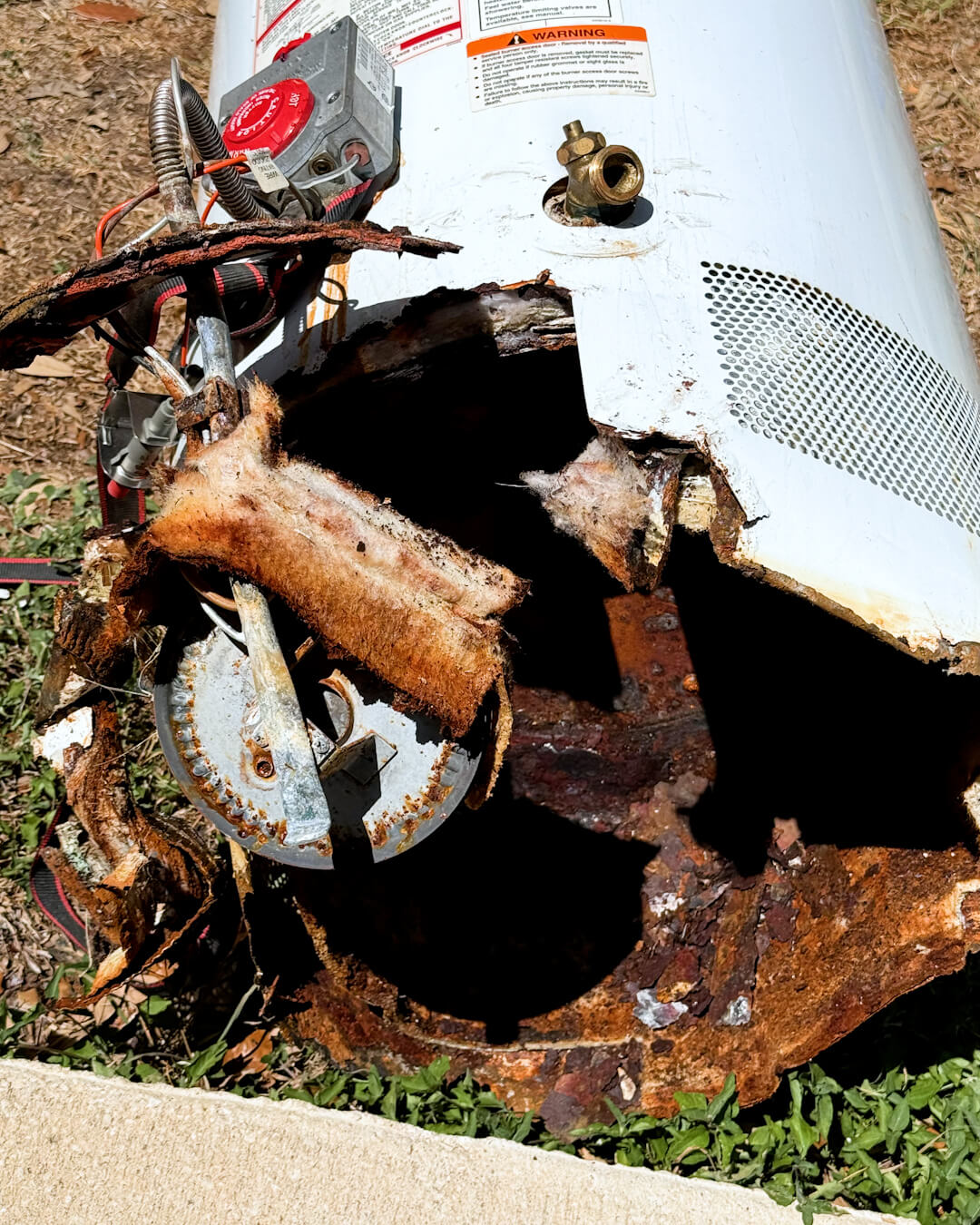
| Under the tank or inside the burner area, often with rust | The inner steel tank has rusted through | Replace the water heater |
When the tank itself is leaking
If the water is coming from the tank and not a valve or fitting, the tank can’t be repaired. Once the steel rusts through, the leak only gets worse, and sometimes it will let go all at once. If that happens while the water is on, it’ll be just like having an open hose spraying in your attic. Plan on a replacement, and don’t wait for a weekend emergency.
Age is a good clue. Most tank water heaters last about 8 to 12 years. The manufacture date is coded into the serial number on the label. If yours is past 10 years and the tank is leaking, replacing it is the right call. Our guide to repairing or replacing a water heater walks through the math.
Never cap the relief valve
If water is coming out of the T&P relief valve pipe, the valve is doing its job: letting off pressure or heat the tank can’t hold safely. Never plug or cap that pipe. Have a licensed plumber find out why it’s opening. Common reasons are high water pressure, a missing or failed thermal expansion tank, or a worn valve.
Why Central Texas water heaters fail early
Much of the Round Rock, Georgetown and Austin area has hard water. The minerals settle to the bottom of the tank as sediment. That layer makes the burner or elements work harder, causes rumbling or popping noises, and wears out the anode rod faster. Once the anode rod is gone, the tank starts to rust from the inside. More on that in why water heaters die faster in Round Rock.
In many Texas homes the water heater is in the attic or in a garage closet. An attic unit should sit in a drain pan with a drain line that runs outside. If the pan is full or the line is clogged, the pan won’t protect your ceiling.
How to keep it from happening again
- Flush the tank once a year to clear sediment. See our water heater maintenance tips.
- Have the anode rod checked every 2 to 3 years and replaced when it’s worn.
- Make sure the drain pan line is clear, especially for attic units.
- Ask about a water softener if you have hard water.
- When it’s time to replace, consider whether tankless makes sense for your home.
Frequently asked questions
Often, yes. A leaking drain valve, relief valve or fitting can usually be fixed in one visit. A leaking tank can’t be repaired and needs to be replaced.
A small drip from the drain valve can wait a day or two. If the tank is leaking or the relief valve keeps discharging, turn it off and call a plumber.
There’s no way to predict it. A slow tank leak can turn into a flood without warning, so treat it as urgent.
Check for condensation on gas units, a dripping fitting on top running down the tank, or water from a nearby AC drain line.
Need help with a leaking water heater?
Koala Cooling & Plumbing offers same-day water heater repair and water heater replacement in Round Rock, Georgetown, Austin, Cedar Park, Leander, Pflugerville and Hutto. Our licensed master plumber will tell you plainly whether it’s a repair or a replacement, and you’ll see the price before we start. Call (512) 759-8800 or schedule online.
Hot water smells strange too? See why your hot water smells like rotten eggs. No hot water at all? Here’s what to check first when there’s no hot water in the house.
